Observability Day Returns to KubeCon + CloudNativeCon North America to Define the Future of Cloud Native Infrastructure

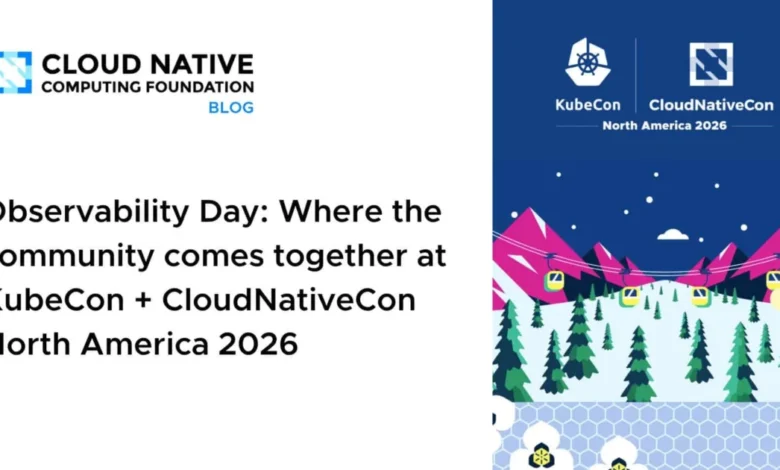
On November 9, 2026, the global cloud native community will converge in Salt Lake City, Utah, for Observability Day, a premier co-located event held in conjunction with KubeCon + CloudNativeCon North America. This gathering represents a critical inflection point for the industry, bringing together maintainers, operators, and end users to address the accelerating complexity of modern distributed systems. As the landscape shifts toward AI-driven workloads and massive-scale data management, this event serves as a central hub for cross-project collaboration and technical standardization.
The event, hosted by the Cloud Native Computing Foundation (CNCF), arrives at a moment of significant maturation for the ecosystem. With OpenTelemetry reaching official graduation status in May 2026, the industry has shifted from a phase of fragmented experimentation to one of unified standards. Observability Day provides a vendor-neutral forum where the practitioners who build these tools and those who maintain them in high-stakes production environments can exchange strategies, troubleshoot common bottlenecks, and define the roadmap for the next generation of infrastructure monitoring.
A Historical Trajectory: From FluentCon to a Unified Ecosystem
The origins of Observability Day reflect the broader consolidation of the cloud native observability space. The event traces its lineage to the inaugural FluentCon, which debuted at KubeCon + CloudNativeCon Europe 2022 in Valencia, Spain. Originally established as a niche gathering for the Fluentd and Fluent Bit communities, the organizers quickly recognized a broader need for interoperability.
Later that same year, the expansion into "Open Observability Day" at the North American KubeCon signaled a paradigm shift. It became clear that while projects like Prometheus, Jaeger, Thanos, and Fluentd were thriving in isolation, the real-world operational challenges of the time—specifically the integration of these tools into unified observability pipelines—required a collaborative venue. Since that transition, the event has evolved from a series of project-specific technical talks into a comprehensive summit that addresses the entire telemetry stack, including ingestion, storage, correlation, and visualization.
The Modern Observability Landscape: Data Quality and Scale
The 2026 iteration of the event focuses on a core set of challenges that define the current era of platform engineering. As organizations scale their infrastructure to thousands of nodes, the sheer volume of telemetry data has created an "observability tax." Managing the cost of storage, the quality of data, and the speed of incident response are no longer peripheral concerns; they are central to the financial and operational viability of cloud native platforms.
Industry data suggests that observability costs can consume between 10% and 30% of total cloud infrastructure spend for high-growth companies. To mitigate this, practitioners are increasingly moving toward intelligent telemetry pipelines that filter, aggregate, and process data at the edge before it reaches expensive backend storage. Observability Day 2026 will feature sessions dedicated to these engineering strategies, focusing on how to maintain high-fidelity monitoring without the corresponding financial overhead.
Addressing the AI Frontier in Cloud Native Infrastructure
Perhaps the most significant thematic addition to the 2026 program is the integration of AI and machine learning workloads into the observability fold. As AI agents and large language models (LLMs) become embedded in production environments, the traditional metrics of "up" or "down" are no longer sufficient.
Monitoring these systems requires a new class of observability, often referred to as "AI Observability." This involves tracking the performance, bias, and operational reliability of inference engines and LLM-based pipelines. Speakers at the November event are expected to present case studies on how existing CNCF tools—such as Prometheus for metrics and OpenTelemetry for tracing—can be extended to capture the specific metadata required to debug AI agents. The consensus among project maintainers is that while the technology stack is evolving, the core principles of observability remain the bedrock for maintaining reliability in an increasingly automated world.
A Multi-Project Perspective: Bridging the Gap
A distinct hallmark of Observability Day is its vendor-neutral, multi-project structure. By design, the event avoids the silos that often characterize commercial trade shows. Instead, it invites the maintainers of prominent CNCF projects—including Prometheus, Fluent Bit, Jaeger, Thanos, Cortex, Perses, Pixie, Kepler, and Inspektor Gadget—to share the same stage.
This cross-pollination is essential for the end-user community. A site reliability engineer (SRE) managing a complex, hybrid-cloud environment rarely relies on a single tool. They are likely using a combination of eBPF-based instrumentation from Pixie, log aggregation through Fluent Bit, and metrics storage in Prometheus. The event provides a rare opportunity to discuss the "glue" that holds these disparate tools together, such as the adoption of the OpenTelemetry Protocol (OTLP) as a universal language for telemetry data.
Strategic Implications for Industry Practitioners
The implications of this event extend far beyond the sessions themselves. For platform engineers, the primary takeaway is the professionalization of the "observability pipeline" as a first-class engineering discipline. As companies move past the initial phase of "collecting everything," the industry is pivoting toward "collecting what matters."
Technical discussions at the event will likely emphasize:
- eBPF-based Instrumentation: Moving from traditional agent-based collection to kernel-level observability to improve performance and reduce overhead.
- Cost-Aware Telemetry: Implementing data lifecycle management policies to ensure that historical data remains accessible while minimizing cloud egress and storage fees.
- Platform Telemetry: Integrating observability into the CI/CD lifecycle, allowing developers to see the performance impact of their code changes in real-time, effectively shifting observability "left."
For those tasked with the stability of production systems, the event offers a roadmap for architectural decision-making. By analyzing the trade-offs between different storage backends, compression algorithms, and sampling strategies, attendees can make informed choices that avoid vendor lock-in and ensure long-term architectural flexibility.
Who Should Attend and What to Expect
Observability Day is engineered for a diverse audience, ranging from seasoned SREs and platform engineers to developers looking to integrate better monitoring into their applications. While the technical depth of the event is high, it remains accessible to those who possess a foundational understanding of Kubernetes and distributed systems.
The organizers recommend that attendees review the schedule in advance to prioritize sessions that align with their specific operational stack. Because the event is designed for interaction, participants are encouraged to engage with project maintainers during the Q&A sessions and networking breaks. This direct feedback loop is arguably the most valuable aspect of the event; it allows the creators of open source tools to hear directly from the users who are pushing their projects to the absolute limits of scale.
Looking Toward the Future of Open Source
As Observability Day 2026 approaches, the broader CNCF community remains optimistic about the future of open source monitoring. The graduation of OpenTelemetry has provided a stable foundation upon which the entire industry can build, and the focus on AI and data quality indicates that the community is maturing in its ability to solve the "data deluge" problem.
By fostering an environment of open exchange, the event strengthens the collaborative fabric that underpins the cloud native ecosystem. In an era where infrastructure is increasingly invisible and abstracted, the ability to observe, understand, and debug the underlying behavior of systems is not just a technical requirement—it is a competitive necessity. Those interested in participating in this evolution are encouraged to register through the official Linux Foundation event portal to secure their place at this definitive industry gathering.
Related posts: